Food stress
Your relationship with food, and easing stress, secrecy, or rigidity around eating.

Your relationship with food and your body touches almost everything: how you feel when you wake up, how you move through a meal, how freely you live your day. When that relationship becomes a source of stress, shame, or constant monitoring, it can be exhausting and isolating. You do not have to keep carrying it alone, and you do not have to have it all figured out before reaching out.
I offer personalized therapy for adults who are struggling with body image and their relationship with food. My approach is collaborative and we work as a team. Therapy will focus on the underlying patterns related to your relationship with food and your body. Together we will work to ease the shame and help you build a steadier, kinder relationship with yourself.

If some of this resonates and you are curious about change, I can help.
I provide outpatient therapy for adults navigating anorexia, bulimia, binge-eating and compulsive-overeating concerns, orthorexia, ARFID, disordered eating, emotional eating, chronic dieting, and body image distress. You do not need a formal diagnosis for these patterns to deserve care.
Each person’s experience is different. We can talk about the food and body concerns themselves, as well as anxiety, perfectionism, grief, relationship patterns, or difficult experiences that may be connected to them. If you need a higher level of medical or eating-disorder care, I will help you connect with the appropriate resources and treatment team.
I believe the relationship between us matters as much as any technique. I take time to understand your history, your circumstances, and what you actually need, and we build a plan together that fits you. My work is relational and integrative, drawing on approaches that fit the person in front of me rather than a one-size-fits-all script.
We move away from the tyranny of numbers and toward body respect, self-compassion, and a way of eating and living that feels more free. For many people, difficulties with food and body are connected to anxiety, past hurt, perfectionism, or hard messages absorbed long ago. We create the space to understand all of that, gently and at your pace.
For some people, eating concerns show up as rules, restriction, bingeing, avoidance, secrecy, or a sense that food takes up far too much mental space. For others, the hardest part is the constant body checking, comparing, or pressure to change themselves before they feel allowed to participate fully in life. These experiences can be exhausting even when they do not fit neatly into a diagnosis.
Therapy gives us room to slow down and understand the pattern rather than treating you like a problem to solve. We can look at what food and body thoughts have come to mean in your life, what tends to make them louder, and what support may help you feel less alone with them. The pace and focus are shaped together, with respect for your history and your current life.
Your relationship with food, and easing stress, secrecy, or rigidity around eating.
Body image and self-worth, and loosening the grip of harsh self-judgment.
Emotional and stress eating, and building other ways to meet difficult feelings.
Stepping off the diet cycle and moving toward body respect and self-trust.
The anxiety, grief, or old patterns that often sit underneath.
When reflection helps, the no-storage Journal Tools page can offer gentle prompts to bring back to therapy.
Outpatient eating disorder and body image therapy can be a fit when you are looking for consistent support while continuing with work, school, relationships, and the ordinary responsibilities of your week. Sessions can make space for the emotional patterns around eating, the impact of body image on daily life, and the practical questions that come up as you work toward a more flexible relationship with food and yourself.
Some situations call for more intensive or medically supported care. If that is what you need, your safety comes first. I will help you connect with the appropriate resources and treatment team, and outpatient therapy can be reconsidered when it is the right level of support.
People often arrive with questions rather than a clear label. You may wonder whether your relationship with food has become too stressful, whether body image is affecting your confidence or relationships, or whether something that feels manageable on the outside has become much harder on the inside. You may have tried to handle it alone for a long time. All of that is meaningful information, and it is enough to begin a conversation.
Our work can include noticing the moments when food or body thoughts become especially demanding, naming the self-criticism that has become familiar, and making room for the feelings those patterns may be trying to manage. We can also talk plainly about what support would be useful outside the therapy room, including when another level of care or another provider should be part of the picture.
There is no requirement to arrive with a diagnosis, a complete history, or a promise that you are ready to change everything at once. Sometimes the first useful step is simply becoming less alone with what has been happening and identifying one place where life could feel a little less governed by fear, shame, or rules.
The goal is not perfection, a prescribed body, or a new set of rules. It is a more honest and workable relationship with yourself, shaped at a pace that respects your life and your safety.
I see clients in person in Coral Gables, within walking distance to the University of Miami. If a commute is a barrier, or you simply feel more at ease at home, online sessions offer the same care with more flexibility. You can choose what feels right, and it can change over time.
Outpatient therapy is a good fit for many people working on body image and disordered eating. If you are facing a medically acute eating disorder that needs a higher level of care, your safety comes first, and I will help you connect with the right treatment team and resources. If and when outpatient support is the right next step, I am glad to be part of your recovery.
If you have been looking for a therapist who sees you as a whole person, not a problem to fix, I would love to hear from you. Reaching out is often the hardest part, and it can also be the beginning of something gentler.
I am an out of network provider and can provide you with a superbill to submit to your insurance for reimbursement. A good faith estimate of costs will be provided for you.
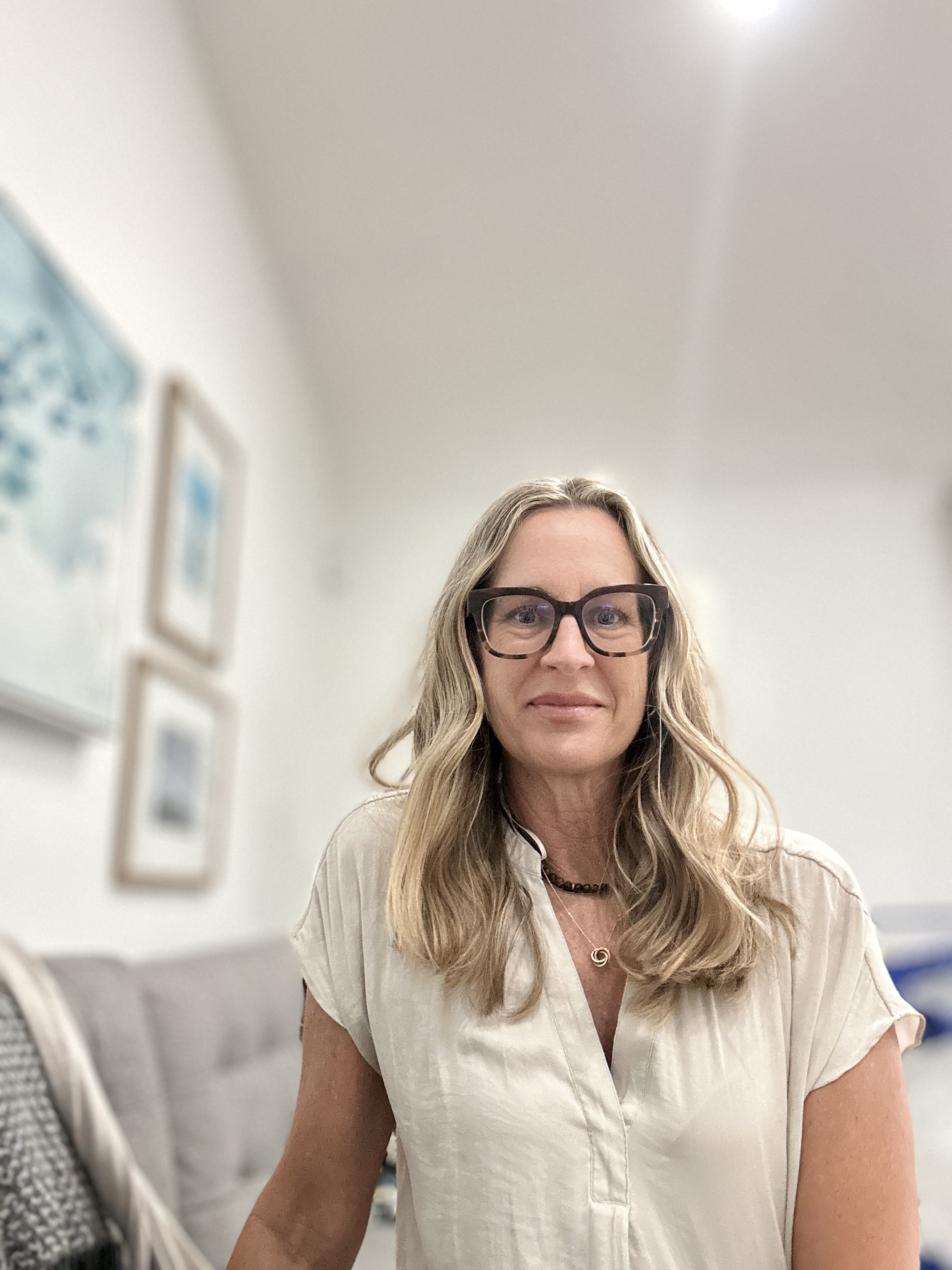
A first consultation is simply a conversation. You share what brings you in, I answer your questions, and together we get a feel for whether we are a good match. There is no pressure and no script, just a chance to be heard and to decide what feels right for you.
I treat a range of eating and body image concerns, such as, but not limited to, anorexia, bulimia, binge eating, orthorexia, and ARFID. I also work with disordered eating, emotional eating, chronic dieting, and body image distress. You do not need a formal diagnosis to begin. If someone needs a higher level of care because of acuity, I will refer them to the appropriate resources.
Yes. I offer secure telehealth to clients located anywhere in Florida, along with in-person sessions in Coral Gables.
No. Many people I work with are struggling with body image, chronic dieting, or a difficult relationship with food, without a formal diagnosis. You are welcome exactly as you are.
An eating disorder therapist helps you understand the emotional, relational, and practical patterns shaping your relationship with food and your body. Outpatient therapy can make room for body image distress, food anxiety, disordered eating, recovery support, and the feelings or experiences connected to them. When a higher level of care is needed, the appropriate treatment team and resources come first.
A first consultation is a conversation about what brings you in, the questions you have, and whether outpatient therapy feels like a good fit. There is no pressure to have the right words or a complete plan before reaching out.
I am an out-of-network provider and can provide a superbill to submit to your insurance for reimbursement. A Good Faith Estimate of costs is available before scheduled care or upon request.
If you are in emotional crisis or thinking about harming yourself, you can call or text 988 to reach the Suicide and Crisis Lifeline, or contact your local emergency services. For eating disorder support and referrals, the National Alliance for Eating Disorders offers a therapist-staffed helpline at 1-866-662-1235, Monday through Friday, 9:00 am to 7:00 pm EST.